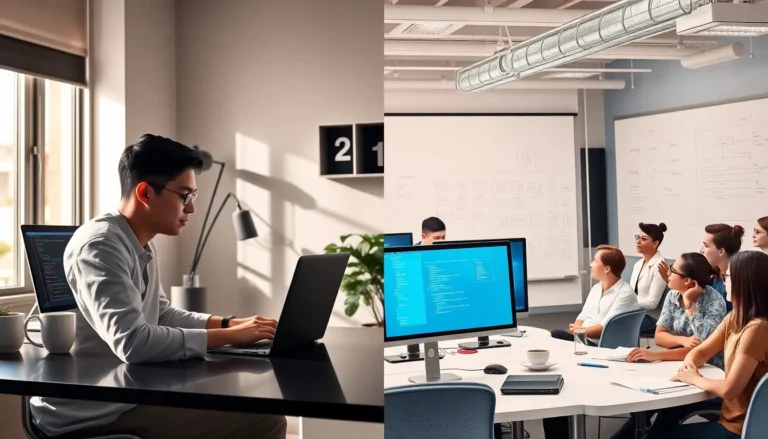
Coding tutorials flood the internet. YouTube channels, interactive platforms, and blog posts promise to teach programming in hours. Yet many beginners watch dozens of tutorials without gaining real skills. The problem isn’t the tutorials themselves, it’s how people use them.
Learning how to coding tutorials work best requires a shift in approach. Passive watching doesn’t build programming ability. Active engagement does. This guide breaks down proven strategies for getting actual value from coding tutorials, whether someone is learning Python, JavaScript, or any other language.
Table of Contents
ToggleKey Takeaways
- Choose coding tutorials that match your skill level—beginners need detailed explanations while intermediate learners benefit from project-based content.
- Type every line of code yourself instead of copying and pasting to build muscle memory and truly understand syntax.
- Pause tutorials and attempt to solve problems independently before the instructor reveals the solution.
- Spend at least as much time building your own projects as you do watching coding tutorials to develop real programming skills.
- Avoid tutorial hopping by completing one quality tutorial per topic before moving to the next.
- Learn to read official documentation early, as this skill reduces long-term dependency on tutorials.
Choose the Right Tutorial for Your Skill Level
Not all coding tutorials serve the same purpose. A complete beginner needs different content than someone with six months of experience. Picking the wrong level wastes time and creates frustration.
Before starting any tutorial, learners should honestly assess their current abilities. Can they write basic functions? Do they understand variables and loops? If these concepts feel foreign, a beginner-focused coding tutorial makes sense. If they’re solid on fundamentals but struggling with specific frameworks, intermediate content fits better.
Here’s a quick framework for selection:
- Absolute beginners: Look for tutorials that explain every line of code and define all terms
- Intermediate learners: Choose project-based coding tutorials that assume foundational knowledge
- Advanced programmers: Seek tutorials focused on specific tools, optimization, or niche topics
The tutorial’s teaching style matters too. Some people learn best from video content with visual demonstrations. Others prefer written guides they can scan at their own pace. Many coding tutorials now offer interactive environments where users type code directly in the browser. Experimenting with different formats helps identify what sticks.
One red flag to watch: tutorials that promise mastery in unrealistic timeframes. “Learn Python in 2 Hours” might provide an overview, but it won’t create competence. Quality coding tutorials acknowledge that learning takes time and practice.
Practice Actively While Following Along
The biggest mistake people make with coding tutorials? They watch without doing. This creates an illusion of understanding. The code makes sense on screen, but when the tutorial ends, nothing transfers to memory.
Active practice changes everything. Instead of just watching, learners should type every line of code themselves, even when a copy-paste option exists. This physical act builds muscle memory and forces attention to syntax details that passive viewing misses.
Take it further by pausing the tutorial before the instructor reveals solutions. Try solving problems independently first. Struggle a bit. That productive struggle is where real learning happens. When someone figures out why their code broke and fixes it themselves, that lesson sticks.
Here are practical ways to stay active during coding tutorials:
- Keep a code editor open alongside the tutorial
- Type code manually rather than copying
- Predict what happens before running each code block
- Modify examples after they work, change variables, add features, break things intentionally
- Take notes on concepts that feel unclear for later review
Some learners benefit from the “teach-back” method. After completing a section of a coding tutorial, they explain the concept out loud as if teaching someone else. This reveals gaps in understanding that passive consumption hides.
The goal isn’t to finish tutorials quickly. It’s to actually learn. Slowing down and engaging actively produces far better results than racing through content.
Build Your Own Projects Between Tutorials
Tutorials provide structure. Personal projects provide growth. The gap between following instructions and creating something original is where programming skills actually develop.
After completing a coding tutorial, learners should immediately apply those concepts to a self-directed project. It doesn’t need to be impressive. A simple calculator, a to-do list app, or a basic website works fine. The point is solving problems without step-by-step guidance.
This transition feels uncomfortable. Without a tutorial’s safety net, learners hit walls. They Google error messages. They read documentation. They try approaches that fail. This process, frustrating as it is, builds the problem-solving instincts that separate hobbyists from capable developers.
Project ideas that reinforce coding tutorial concepts:
- Rebuild the tutorial project from scratch without looking at the guide
- Add three features the tutorial didn’t cover
- Combine concepts from two different coding tutorials into one application
- Recreate a simple version of an app or website already in use
Keeping a “project journal” helps track progress. Document what worked, what broke, and how problems got solved. These notes become valuable references and show growth over time.
The ratio matters too. For every hour spent on coding tutorials, spending at least an hour on independent projects produces balanced learning. Some developers recommend a 1:2 ratio, two hours of project work for every tutorial hour. Find what works, but don’t skip the project phase entirely.
Common Mistakes to Avoid When Using Tutorials
Even with good intentions, learners fall into patterns that sabotage their progress with coding tutorials. Recognizing these traps helps avoid them.
Tutorial hopping tops the list. Someone finishes a Python basics tutorial, then starts another Python basics tutorial from a different creator, then another. They never move beyond fundamentals because starting fresh feels easier than pushing into harder material. Pick one quality coding tutorial per topic and finish it.
Perfectionism paralysis stops people before they start. Searching for the “perfect” tutorial wastes weeks that could go toward actual learning. Most popular coding tutorials cover similar material adequately. Just pick one and begin.
Skipping foundations creates problems later. Jumping straight to exciting frameworks like React or Django without solid JavaScript or Python basics leads to confusion. Coding tutorials for advanced topics assume prior knowledge. Shortcuts here create shaky foundations that collapse under pressure.
Not reviewing older material means forgetting what was learned. Spaced repetition, revisiting concepts days or weeks after first learning them, strengthens retention. Quick reviews of previous coding tutorial notes before starting new content keeps knowledge fresh.
Ignoring documentation keeps learners dependent on tutorials forever. Official documentation for programming languages and frameworks contains answers to most questions. Learning to read and use documentation is a skill that coding tutorials rarely teach directly but that every working developer needs.
One more: comparing progress to others. Someone else might finish the same coding tutorial faster. That comparison helps no one. Learning speed varies. What matters is consistent forward movement, not pace.